Introducing… the Fluid In and Outs Tracker!
Fluid therapy is one of the most common treatments we use in veterinary practice - and monitoring these patients is an enormous part of our role as veterinary nurses and technicians.
And the best - but most challenging - way to monitor fluid balance accurately is by measuring and comparing your patients’ fluids in and fluids out.
I spent years doing this in practice - the hard way.
It was a headache - going through hospital sheets, adding up everything, then realising that the last time the patient urinated we’d forgotten to weigh the tray and everything was an educated guess at best.
And almost every other person I spoke to had the same response to fluids in and out - ‘ugh’.
Not because they didn’t want to do it, but because it was a nightmare (and took ages).
So I built the tracker I wished I'd had years ago (and now use for all my patients).
The fluid balance tracker is your BEST FRIEND when it comes to fluid monitoring.
It helps you track every in, every out, and then does ✨ all of the maths for you✨ so you know EXACTLY where your patient’s fluid balance stands.
It even lets you know how balanced (or not!) your patient’s fluid status is, and gives you a list of parameters to look out for based on the result.
Download yours now!
Details:
Contains one digital download file, an interpretation tool, and instructions for use - save it to your computer or phone and use it whenever you need.
You’ll receive a link to access the file via email after your purchase - if you’ve not received it, check your spam folder.
Important:
This tool is intended as a guideline only, for veterinary professionals working in clinical practice. It does not replace veterinary surgeon direction, prescription, or clinical judgement. A veterinary surgeon must prescribe fluid therapy and medication, and direct adjustments to the patient’s treatment and fluid plan. All veterinary nurses, technicians and associated professionals must work within local and regional regulatory guidelines and under veterinary direction. Not for editing or redistribution.
Introducing… the Fluid In and Outs Tracker!
Fluid therapy is one of the most common treatments we use in veterinary practice - and monitoring these patients is an enormous part of our role as veterinary nurses and technicians.
And the best - but most challenging - way to monitor fluid balance accurately is by measuring and comparing your patients’ fluids in and fluids out.
I spent years doing this in practice - the hard way.
It was a headache - going through hospital sheets, adding up everything, then realising that the last time the patient urinated we’d forgotten to weigh the tray and everything was an educated guess at best.
And almost every other person I spoke to had the same response to fluids in and out - ‘ugh’.
Not because they didn’t want to do it, but because it was a nightmare (and took ages).
So I built the tracker I wished I'd had years ago (and now use for all my patients).
The fluid balance tracker is your BEST FRIEND when it comes to fluid monitoring.
It helps you track every in, every out, and then does ✨ all of the maths for you✨ so you know EXACTLY where your patient’s fluid balance stands.
It even lets you know how balanced (or not!) your patient’s fluid status is, and gives you a list of parameters to look out for based on the result.
Download yours now!
Details:
Contains one digital download file, an interpretation tool, and instructions for use - save it to your computer or phone and use it whenever you need.
You’ll receive a link to access the file via email after your purchase - if you’ve not received it, check your spam folder.
Important:
This tool is intended as a guideline only, for veterinary professionals working in clinical practice. It does not replace veterinary surgeon direction, prescription, or clinical judgement. A veterinary surgeon must prescribe fluid therapy and medication, and direct adjustments to the patient’s treatment and fluid plan. All veterinary nurses, technicians and associated professionals must work within local and regional regulatory guidelines and under veterinary direction. Not for editing or redistribution.

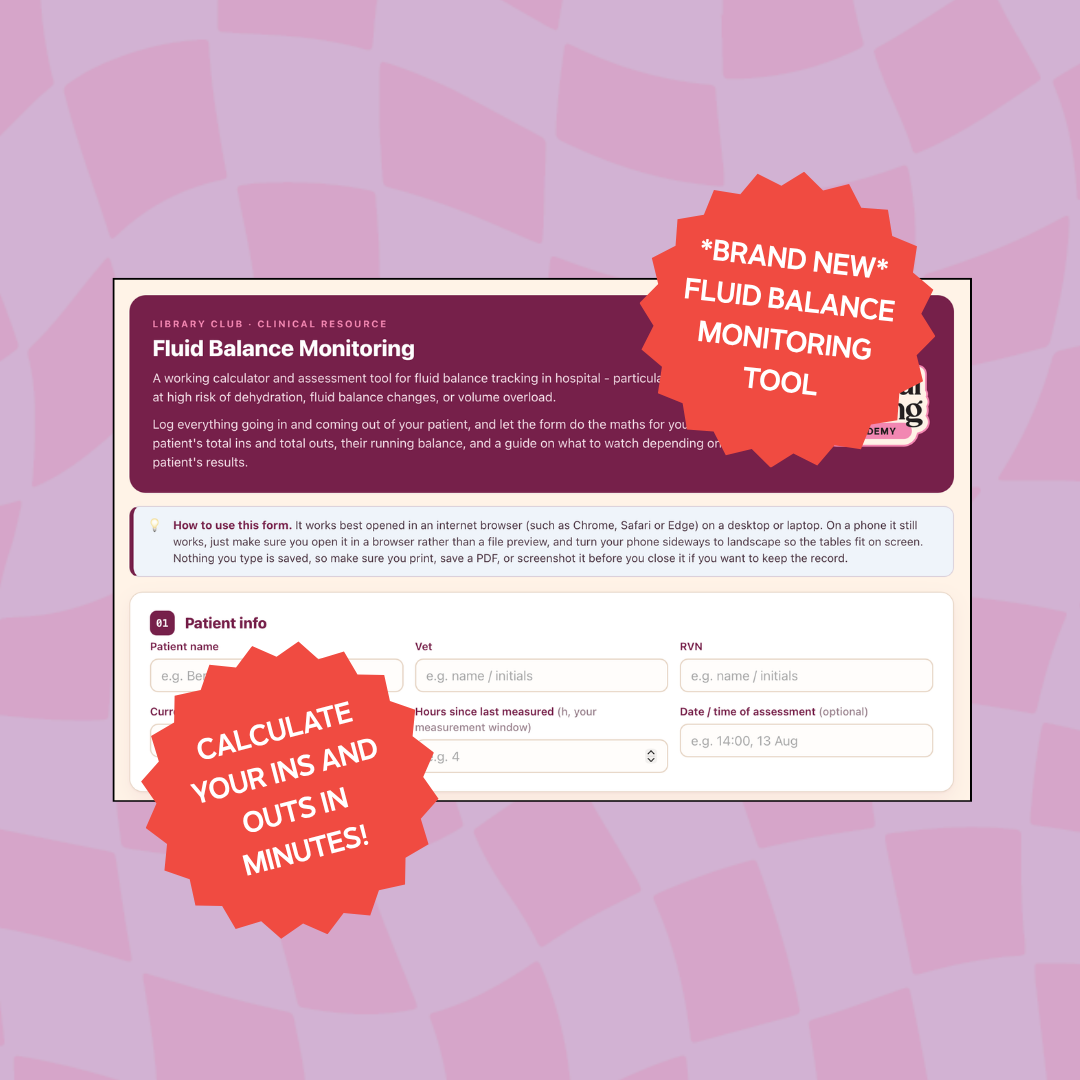 Image 1 of 6
 Image 2 of 6
 Image 3 of 6
 Image 4 of 6
 Image 5 of 6
 Image 6 of 6